
E1X DC1 DAC/Control Preamp
The E1X-DC1 DAC Control Preamplifier brings our Advanced Integrated Platform—developed from the BLACK system architecture—into a single, streamlined unit. With HDR-II and AMiP technologies, it delivers high-performance DAC, streaming, and phono stage capability for a clean, accurate, and reliable listening experience.
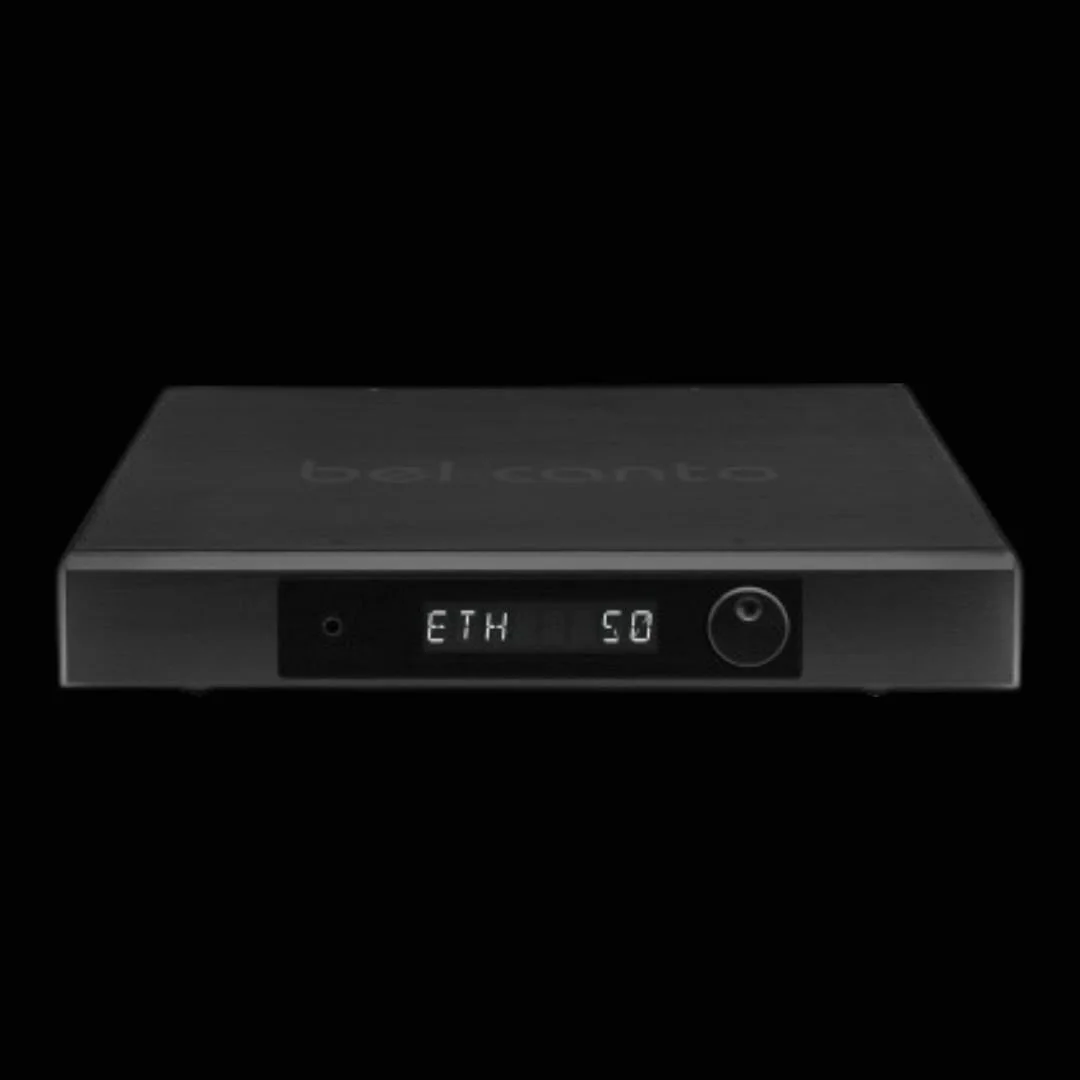
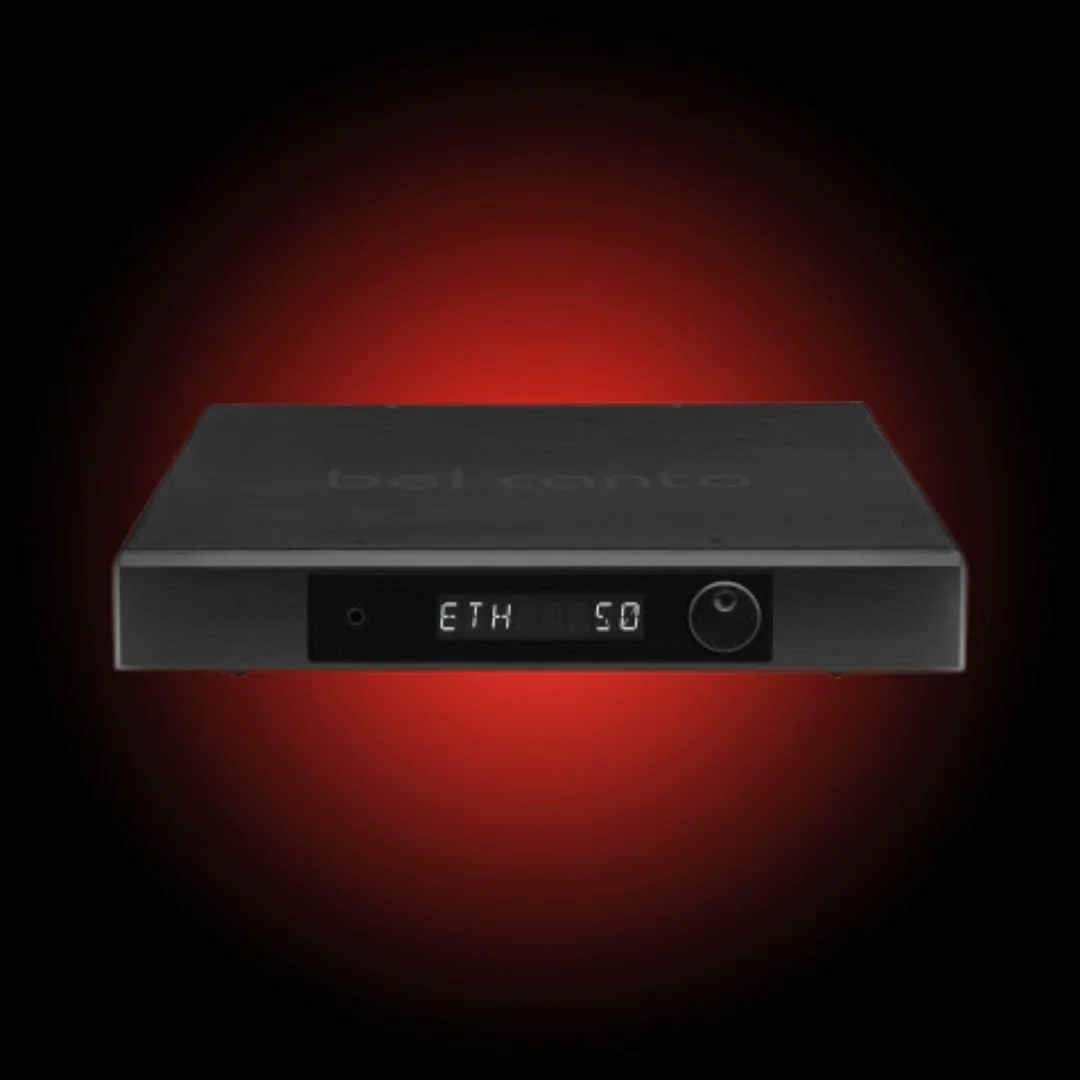
The E1X-DC1 DAC Control Preamp marks entry into our Advanced Integrated Platform technology that is directly descendant from the BLACK system architecture. The DC1 combines our HDR-II and AMiP control/processor technologies to provide unparalleled DAC, streamer, and phono stage performance into a single chassis that is designed for music lovers who want an uncomplicated, uncompromised, and exhilarating home audio experience. The E1X sonic characteristic emphasizes profound and compelling musical expression.
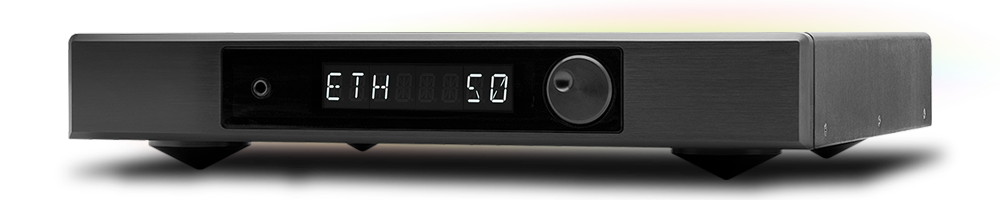
The E1X Advanced Integrated Platform (AIP) pulls design elements from the award-winning Black System that optimizes both analog and digital system performance. Each input travels an expertly placed circuit path that provides noise rejection and signal optimization along with advanced custom time optimized filters that reduce sonic blur and increase clarity and dynamic impact.
The E1X DC1 DAC/Control Preamplifier utilizes Bel Canto’s proprietary technologies that include our advanced HDR-II (High Dynamic Range) DAC core and the AMiP (Asynchronous Multi Input Platform) Control/Processor. Our advanced design provides uncompromised sound from any source. Whether you’re streaming music through Ethernet or USB, using the full suite of digital inputs for spinning a CD, the line level inputs for a reel-to-reel tape deck or listening to vinyl via the internal MM/MC software controlled analog phono stage, you’ll experience the full potential from all source components.
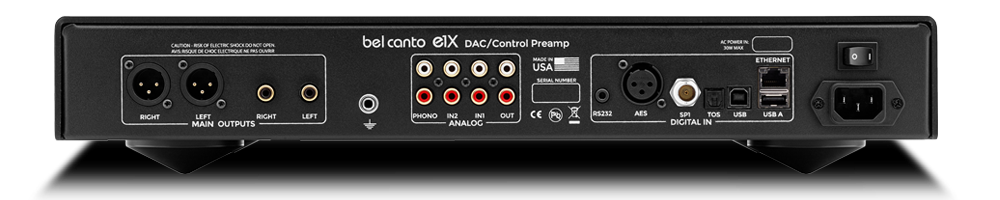
The E1X-DC1 DAC Control Preamplifier delivers exceptional accuracy and performance, integrating DAC, streaming, and phono capabilities into one refined platform. Its advanced HDR-II and AMiP architecture preserves signal integrity and reveals clear, dynamic, and naturally expressive sound.
E1X-DC1
TECH
E1X DAC Technology

Our new AMiP (Asynchronous Multi-Input Processor) Platform manages all the inputs of the Black Integrated amplifier. It is a powerful custom asynchronous core with 6 processor units that consist of: 2-32 bit XMOS general purpose processors, 2-32 bit ARM processors units as well as 2-dedicated audio processors. These together handle the ethernet interface that works with Roon Ready and DLNA servers, USB-A host streaming input, a USB2-24/384 input, legacy digital SPDIF/AES/TOS inputs and analog line level and phono inputs. The AMiP platform handles DSD and MQA processes and our custom Time Optimized Filter with integer up-sampling. There is a high-performance MM/MC programmable phono stage and 2-line level inputs that feed a high dynamic range 24/192 ADC into the processor core. Dual free running Ultra-Low Phase Noise Master Clocks direct all the digital processing and strip any incoming jitter from external digital input streams. There is a 32-bit ARM core processor that handles the user interface and coordination of the AMiP Platform.
The AMiP platform feeds our HDR-II DAC core running on a dedicated power supply through a custom digital interface. This is where volume control is performed using 32-bit math, the HDR-II core achieves 126dB of dynamic range, higher than any analog volume control could achieve for completely transparent volume control function. The HDR-II also has an asynchronous interface with a free running Ultra-Low Phase Noise Master Clock positioned adjacent to the Digital to Analog Converters. It includes a 64-bit dedicated audio Digital Signal Processor to provide completely transparent Bass Management, sophisticated Tilt and Bass EQ functions and allows us to fine tune things like the RIAA response in the phono section. There is a secondary DAC (112dB dynamic range) that drives the line output and provides headphone and subwoofer output capability with bass management features. HDRII logo techBel Canto’s High Dynamic Resolution-II (HDR-II) core is a highly refined Digital to Analog Core

Rendering high levels of definition and musicality. It is the culmination of more than 20 years of audio DAC design evolution. With the HDR-II Core we have improved the dynamic range, analog output stage design and digital filters while reducing spurious signal generation and jitter related errors. Our new HDR-II Core has demonstrated that we can increase the resolution of musical detail, and improve listenability and perceived quality of the recorded music. This is in contrast where ‘transparent’ and ‘revealing’ often means ‘bright’. The HDR-II Core presents the original music with high levels of clarity and emotion. Our HDR-II Core starts with a deliberate and careful choice of DAC technology. This choice defines the ultimate achievable performance and is defined by several key specifications. Our research has directed us to the best DAC technology, confirmed through extensive testing and listening.
Bel Canto chooses the most refined CMOS digital to analog processor to provide superior dynamic range through extremely low noise, distortion and jitter sensitivity. The analog output section takes best advantage of the underlying CMOS technology to achieve the highest levels of analog purity and uncompromised performance. This Advanced Segment Technology DAC combines both multi-bit and multi-bit delta-sigma technology to deliver superb performance with a dynamic range of 132dB and transparent linear-phase digital filters. The CMOS analog conversion operates in a Constant Voltage, Class A Differential Current mode for minimal distortion and best analog performance. Through detailed FFT analysis we characterize DAC performance over the complete dynamic range, ensuring that the DAC analog outputs behave in a true analog fashion. As with the best analog circuitry our DAC technology exhibits diminishing levels of distortion and spurious signals at lower output levels where most of the audio signals live. Our HDR-II Core analog behavior is contrasted in the following figures with an increasingly popular DAC technology that looks good on paper but does not deliver true analog purity over the audio dynamic range.
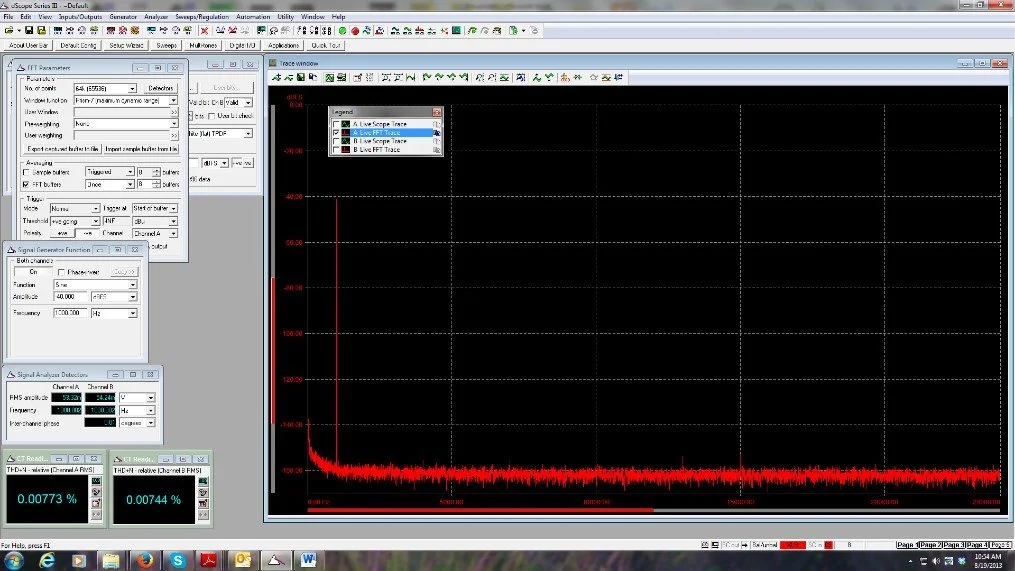
It is critical that a DAC reproduce low level signals cleanly with no added distortion or spurious energy above the noise floor to color the sound. Note how clean the graph of our HDR-II Core is in Figure 1 with only the 1kHz, -40dB test signal appearing above the very low noise floor below -150dB. The extremely pure results in our Figure 1 HDR-II DAC results in a very pure lifelike sound quality. This was a major factor in our original choice of this DAC technology and our continued investment in this technology.
Digital Done Right
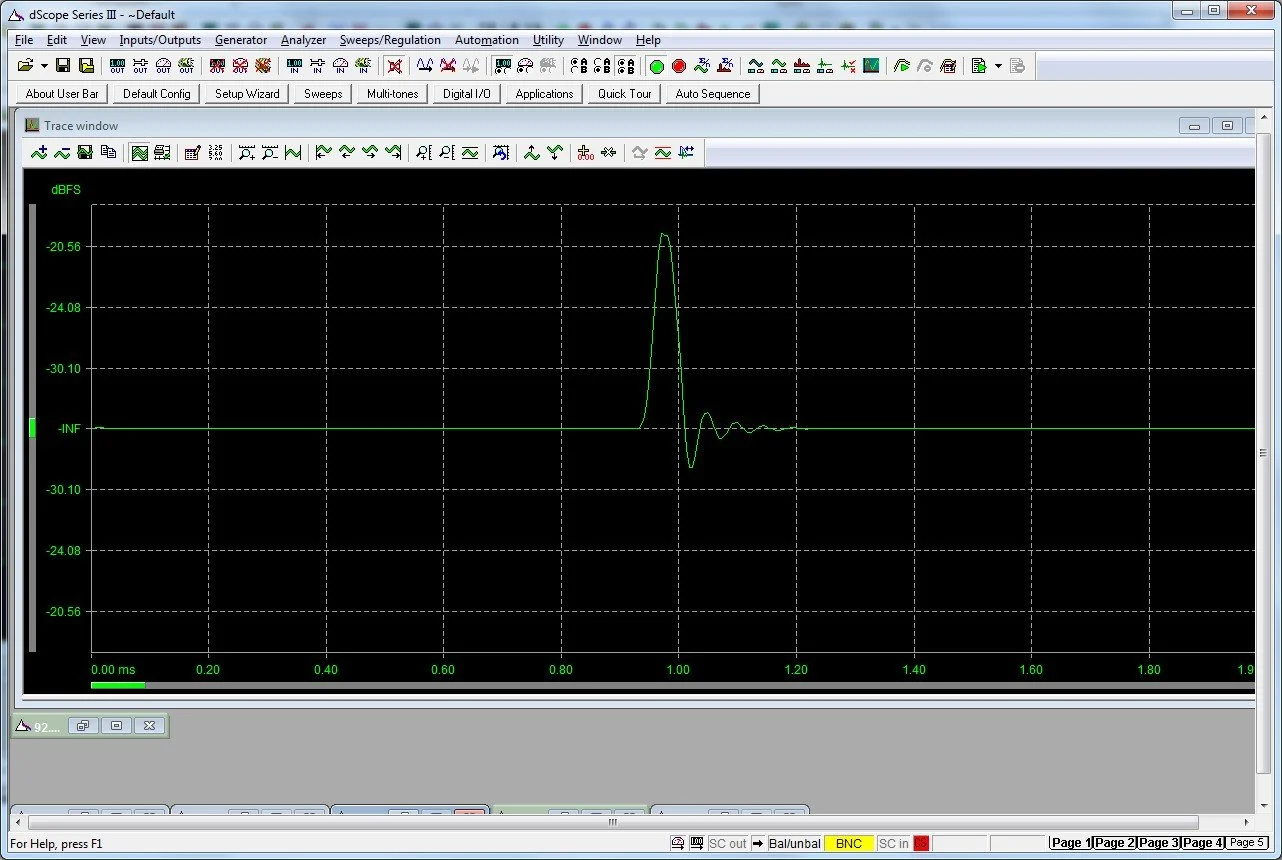
The HDR-II Core digital design starts with our Ultra-Low Phase Noise Master Clocks. These superior clocks are free running and fed from dedicated ultra-low noise analog power supply regulators. There are 2 stages of asynchronous interfacing to ensure that the final DAC output is jitter free and independent from any noise on the incoming digital signals. Our custom MQA based digital filters define an optimized impulse response from all sources, MQA, PCM, Analog and DSD. Figure 3 shows this impulse response with a 44.1kHz CD test signal. Our custom digital filters are designed to largely mimic the time domain response of an audio signal traveling through 10 meters of air. This superior time domain response insures the best sonic performance for all signals reproduced by our HDR-II Core DAC technology. MQA, High Bit Rate PCM, Analog and DSD all approach the impulse response resulting from travel through 10 meters of air, retaining the critical time relationships in the original music.
Pure Class A Differential Analog Output
A critical advantage of our HDR-II Core architecture is how the Class A Differential Current Mode output from our DAC operates in concert with our custom balanced analog section to best preserve the original dynamics of the recording. The large constant-bias differential currents impose pure Class A operation to every part of the analog output stages, every precision resistor, film capacitor and amplification device is biased with constant current and voltage. This constant bias keeps all components in thermal stasis and insures that all the original signal dynamics are retained. Through careful parts choices, architectural considerations and design details, refined over numerous generations, Bel Canto’s HDR-II Core has been optimized to render pure, dynamic analog signal quality from all music sources.
Phono
Our analog dual stage phono architecture consists of an ultra-low noise input RIAA amplifier with precision filter components and fixed 40dB gain. This is followed by a digitally controlled analog variable gain stage to adapt the RIAA gain for a broad range of MM and MC cartridges. Input loading is controlled from the menu so that you can load your MC cartridge with the optimum impedance. This new phono architecture is optimized for accurate, low noise RIAA filter operation and compatibility with many cartridges.
Headphone Output
The Headphone output is driven from a dedicated 112dB dynamic range DAC through a high current output buffer stage. It can drive 32-ohm phones to high level and provide excellent headphone sonic detail and performance.
Sub Output
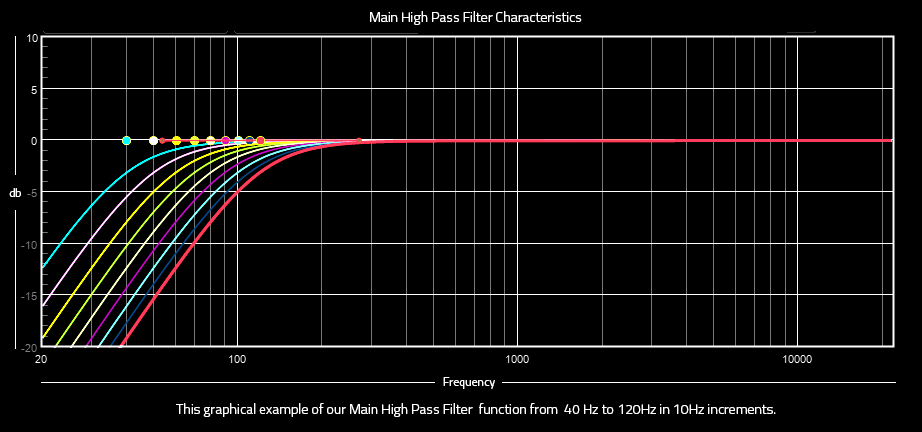
Bass Management functions include independent selection of a 2nd order Butterworth low pass and high pass filter set. The main speakers can be run full range or rolled off below frequencies from 40 to 120 Hz. The subwoofer low pass can be set for full range or frequencies from 40 to 120 Hz. This approach drives maximum flexibility to optimize the integration of a subwoofer. There is also +/-6dB of gain trim range on the subwoofer output.
Line Level Inputs
There are 2-line level analog inputs that provide 110dB of dynamic range and can be used for legacy analog sources such as tape, tuner or a home theater bypass where the volume level would be set to a high setting (84.0) on the ACI 600 and volume is controlled through the home theater processor. These inputs enhance the ability to integrate the E1X DAC into many different systems with many different signal sources.
E1X-DC1 Features
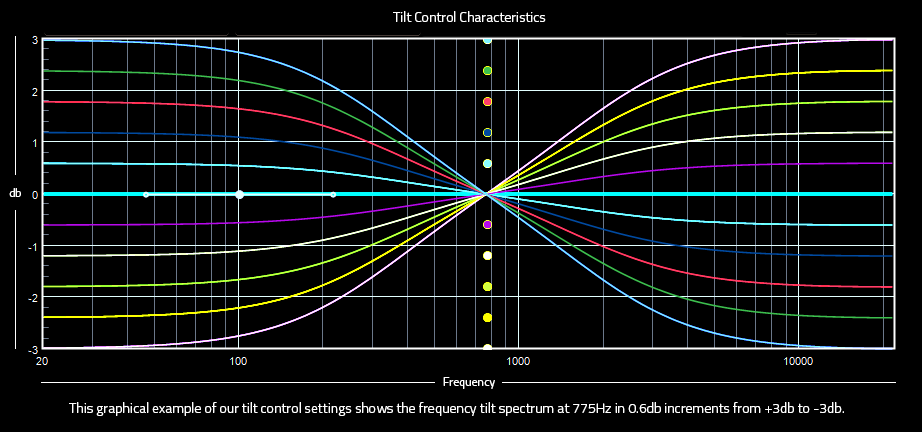
Our precision filter and equalizer functions use the power of a custom 64bit DSP engine embedded into the internal signal path. Bel Canto’s approach removes the possibility of any degradation due to noise, distortion or response errors introduced by traditional analog filters. In other words, our approach permits subtle equalization and tonal control without compromising the sonic integrity of the original signal.
The Tilt function allows you to trim High frequency and simultaneously boost low frequency equally (or the opposite) to dial in the tonal balance you desire. This is done by holding the axis point of 775Hz and adjusting in a see saw fashion the upper and lower frequencies. This is ideal for eliminating the minor flaws in recordings or in sonically challenged spaces.
Gordon Holt is on record as saying: “it’s far better able than most to correct for many of the worst and most commonly-encountered sonic flaws in recordings.”
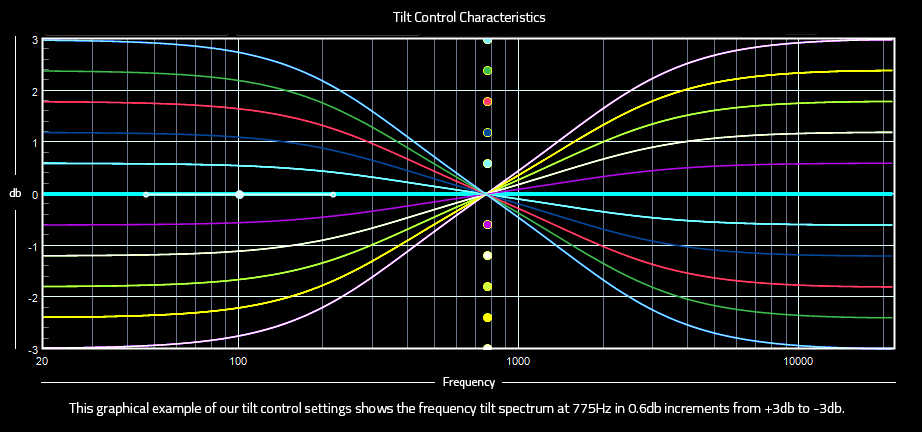
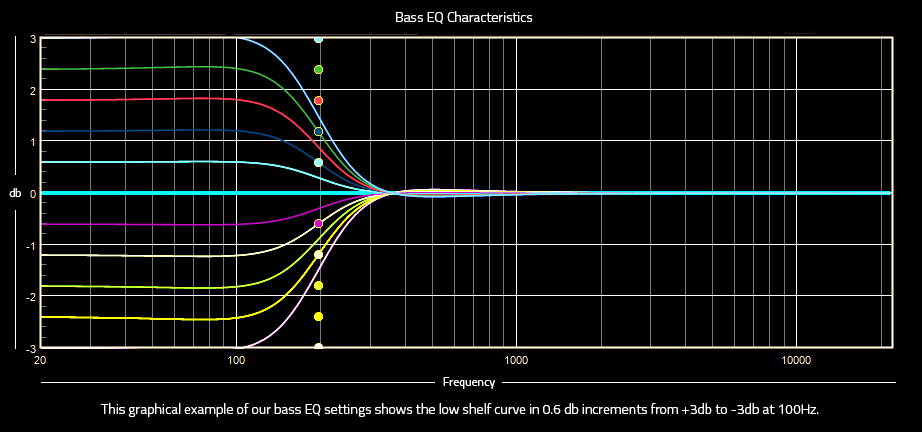
The bass EQ gives you great control over low frequency energy below 200 Hz helping you to achieve the tonal balance you desire in room and with speaker placement. It operates over a +/-3dB range with 0.6dB increments (–5, Off, +5) providing subtle optimization of bass energy.
The High Pass circuitry, inserts a high-pass filter into the main speaker output path optimizing the performance of your speakers with the sub output. You can also independently insert a low pass filter into the subwoofer output to help control sub levels. The filters are adjustable anywhere from 40Hz to 120Hz (in increments of 10Hz), depending on the low-frequency extension of your main speakers and the size of your subwoofer. The provision of these high-pass and low-pass filters is far-sighted, as it enables far superior integration of your main speakers with your subwoofer than would otherwise be possible.
The control menu also has a ‘maximum volume’ setting. This allows you to set the max volume at any level you prefer and ensures no one can inadvertently increase the volume using an App volume control or the remote and do damage to your speakers. The Max volume can be changed at any time and comes from the factory set at 85.
The Ethernet connection on the rear panel allows you to update your unit firmware to the current specification at any time the unit is connected to the internet. This can be checked through the menu by the user. If there is an update you will be given the choice to complete the upgrade ensuring that your unit is always up-to-date or decline the update and perform it at another time. If you choose to complete the update the unit will display the latest software Rev’s on the display and let you know when it is completed. The unit will reset itself (you do not have to power cycle the unit) and be ready to play after completion.
e1X-DC1 Specifications
E1X DAC/Control Preamp Manual
Maximum Data Input Rates
24bit Data to 192ks/s:
AES, SPDIF, TOSLINK
24bit Data to 384ks/s, MQA, and DSD64/128:
10/100 Ethernet
24bits to 192ks/s and DSD64 (DoP):
USB2 Audio
Low Level Outputs
Line Level Analog:
4.5Vrms with Bass Management
Headphone:
4.5Vrms maximum, 32ohm minimum load
MM/MC Input
Input Sensitivity:
MM: 2.5mV to 5mV; MC: 0.25mV to 0.5mV
Input Load:
MM: 47K ohms; MC: 50, 100, 500, 1000
RIAA Accuracy:
+/- 0.25dB, 50Hz-15kHz
THD+N:
<0.01% 1kHz A-Weighted
SNR:
>70dB A-Weighted
Line Inputs
Maximum Input:
2.2 Vrms RCA
Input Impedance:
10k ohms RCA
THD+N:
0.003%, 1kHz
Dynamic Range:
110dB, A-weighted 20Hz-20kHz
Main Outputs
Balanced XLR Output and Impedance:
5.5Vrms, 100 ohms
Minimum Load:
600 ohms
RCA Output and Impedance:
2.75Vrms, 100 ohms
Performance
Dynamic Range:
126dB A-weighted
THD+N:
<0.001% 1W, 1kHz, 4 ohms
IMD (CCIF):
<0.001%, 1W, 18.5:19.5kHz 1:1, 4 ohms
General
Power Usage On:
20W
Power Usage Off:
0W
Internally Set Operating Voltages:
100-120VAC, 220-240VAC 50/60 Hz
Dimensions:
17.75 W x 15.75 D x 3.25 H inches, 451 x 400 x 83 mm
Weight:
14 lbs (6.4 kg)
Features and specifications are subject to improvements and changes without prior notice.